
When we ask what lies at the center of this games section, the behavioral science answer is the “Integration of Expectation and Engagement.” Users stepping into the system are not just looking for computer software; they are looking for an environment that can respond to their personal Risk Tolerance. The games section acts as a stage where players can shift their status from passive spectators to active participants. The existence of a stake real money casino is driven by the psychological mechanism of humans wanting to test their intellect, intuition, and understanding of probability against transparent algorithmic systems.
Furthermore, the center of the games section reflects the evolution of Data Engineering. The platform’s ability to offer thousands of games processed at high speed, with high-definition audio and visuals, and real-time transactions with Zero Latency, is a highly complex technological achievement. The games section thus serves as a showroom where the platform displays its technological capabilities, system fairness (Provably Fair), and vision for creating sustainable entertainment in the digital economy era.
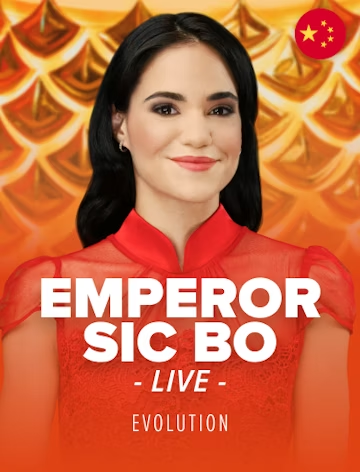
Stake Live Casino


















Why the Presentation of Game Categories is Important
In the fields of Human-Computer Interaction and Cognitive Psychology, there is a principle known as “Hick’s Law,” which states that the time it takes for a human to make a decision increases with the number and complexity of choices available. When applying this theory to stake online casino, which possesses a massive game library, Categorization and Presentation become crucial tools in preventing “Analysis Paralysis.”
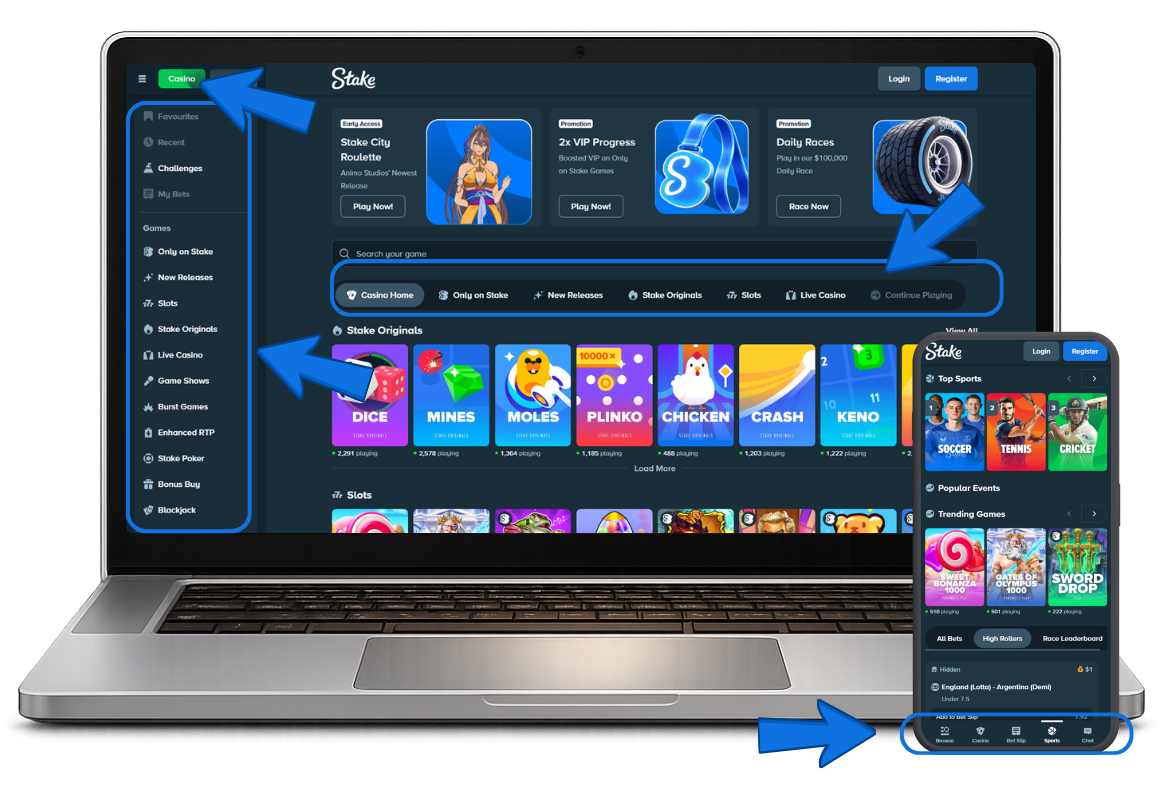
If the platform presented all games in a long, unorganized list, users would experience Information Overload and might feel Cognitive Fatigue before even placing a bet. Therefore, presenting clear game categories is of paramount importance. Grouping games into logical categories, such as video slots, live casino, table games, or platform Originals, acts as a “Visual Filter” that helps users quickly eliminate unwanted options.
Moreover, the presentation encompasses the design of Thumbnails, displaying software Providers, and applying Tags such as “New Game” or “Popular Game.” These elements are not merely for aesthetics; they serve as “Behavioral Navigational Cues” that guide the eyes and build a Mental Model for the user. The platform’s ability to organize complexity into simplicity and easy searchability is the highest art of interface design, directly impacting the players’ Session Duration within the system.
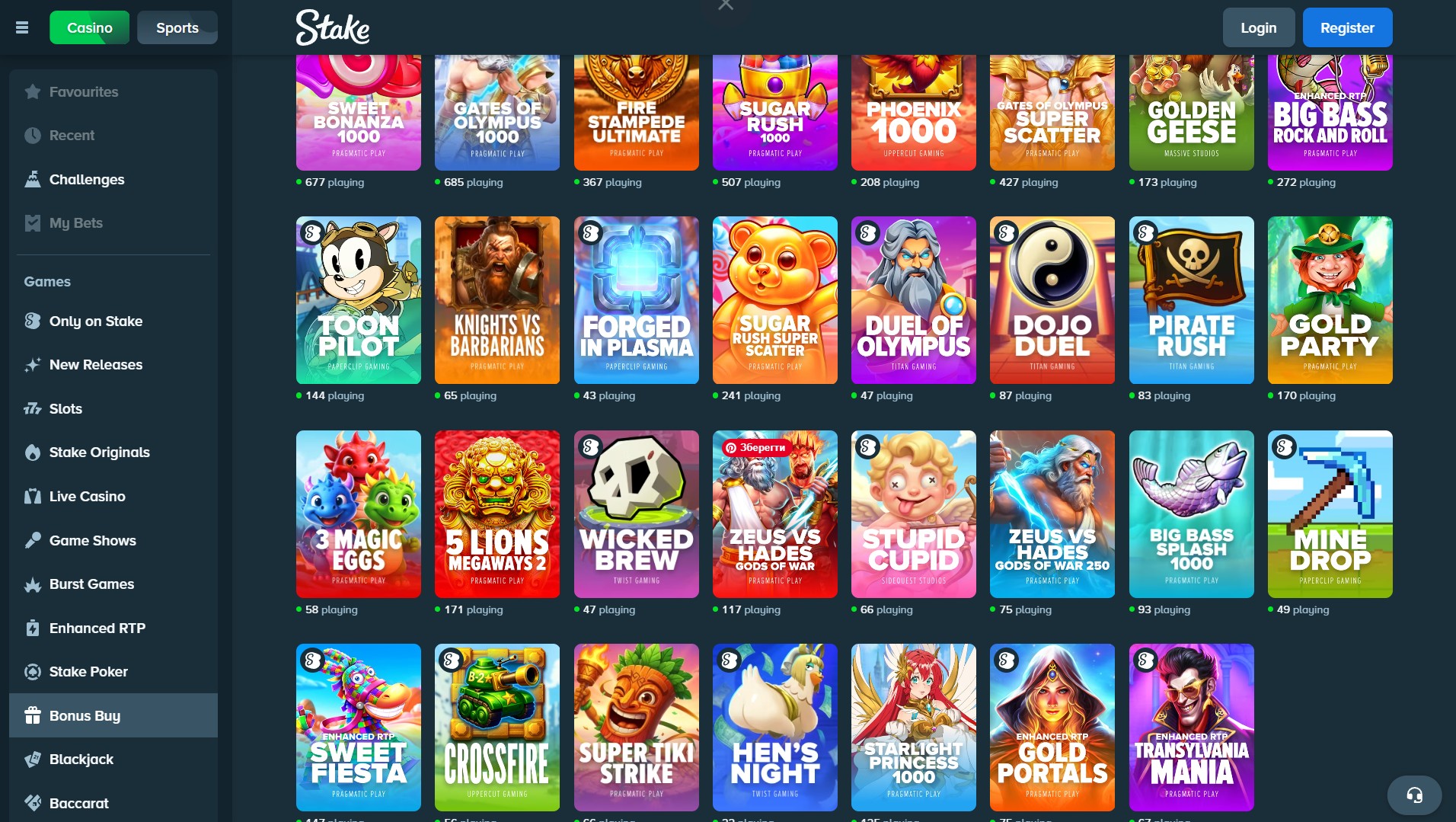
Stake Slot Machine Section

















How New Users Perceive the Games Section
Understanding Novice User Perception is essential for evaluating the effectiveness of information architecture. Users who are just beginning to experience this digital environment usually enter with two conflicting feelings: Curiosity to explore and Anxiety of the Unknown. For consumers in rapidly growing emerging economic markets, such as the user base from stake casino india, stepping into a games section with thousands of options can easily be an overwhelming experience.
In the eyes of new users, the game catalog is like a colorful maze. What initially attracts them are usually games with beautiful graphics, familiar themes (such as ancient civilizations, movies, or mythology), and most importantly, games with easy-to-understand mechanics. Generally, new users tend to avoid games with complex Paytables or games requiring immediate deep strategic decision-making. They desire a safe space to experiment and learn the Action-Reward Relationship.
Simplifying the first interaction is key. The platform often presents “Recommended Games for Beginners” categories or features games with a flat Learning Curve on the front page. Additionally, allowing new users to utilize a stake online casino code to receive benefits or simulated credits is a strategy that significantly lowers the Psychological Barrier. When they do not have to worry about losing their personal capital immediately, they can effectively learn the interface, understand the rhythm of the games, and build familiarity with the system. Intuitive organization is therefore not just about aesthetics, but about Confidence Building for new consumers.
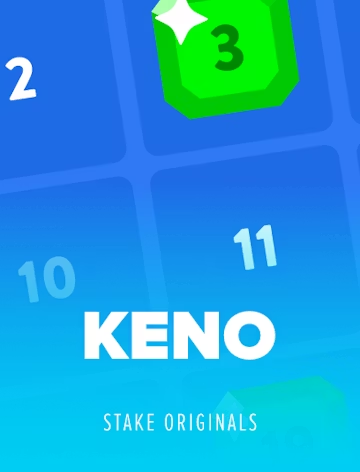
Platform Original Games (Stake Originals)













What Experienced Users Look For
When users develop their skills and understanding from a basic level to an Expertise Level, their interaction behavior with the games section changes entirely. Experienced players or statistical investors will no longer be attracted by flashy animated graphics or game themes designed for superficial entertainment. They view the games section as a “Probability Database” and a “Financial Allocation Tool.”

What this advanced user group looks for first is the “Breadth and Depth of Choices.” They demand a platform that comprehensively aggregates games from world-class software developers (Tier-1 Providers) to enable “Diversification” according to investment principles. Experienced players usually have personalized strategies, such as searching for Ultra-high Volatility slot games to build capital, or seeking games with a Return to Player (RTP) rate higher than the market average.
The clearest example is the emphasis placed on live casino and digital table games, especially stake casino blackjack, which is considered a game requiring cognitive skills and statistical card counting. Professional players will look for tables with Table Limits that align with their wallet size, and seek Table Rules that offer the lowest possible House Edge. Furthermore, the capability of the Search Algorithm to filter games by developer name, volatility level, or specific in-game features is a decisive factor in whether the platform can meet the complex and specific needs of highly experienced user groups. The Perception of Catalog Fullness is what reflects the professionalism of that digital entertainment institution.