

Responsible engagement begins with acknowledging the mathematical reality that these systems are always designed with a statistical House Edge. Therefore, allocating a budget for participating in these activities should be viewed as an “entertainment expense,” akin to purchasing a movie ticket or a special dinner. Psychological preparation and assessing one’s own risk tolerance before entering a digital environment are the most vital foundations to prevent recreational activities from escalating into problems that impact the stability of daily life.
Why Controlling Personal Time and Expenses is Crucial
Controlling personal time and expenses is not a restriction of freedom, but rather “Cognitive Immunization” in a psychological sense. When humans enter a state of emotional arousal and anticipate a reward, the Prefrontal Cortex, the part of the brain responsible for logical control, often decreases in activity, while the parts responding to instinctual emotions become dominant. Predetermining clear time and budget frameworks acts as a shield, preventing users from falling into the trap of Impulsive Behavior.
Setting a spending ceiling that one can afford to lose without affecting real-life financial obligations helps maintain Emotional Distance between the user and the outcome of the activity. When users know that this specific amount is their absolute maximum limit, they can accept the loss without experiencing panic. Similarly, controlling time prevents the state of “Time Distortion,” which frequently occurs when focusing on a screen for prolonged periods. Maintaining personal discipline to adhere to established frameworks is an expression of maturity and effective self-management, ensuring that this activity remains enjoyable and free from psychological pressure.
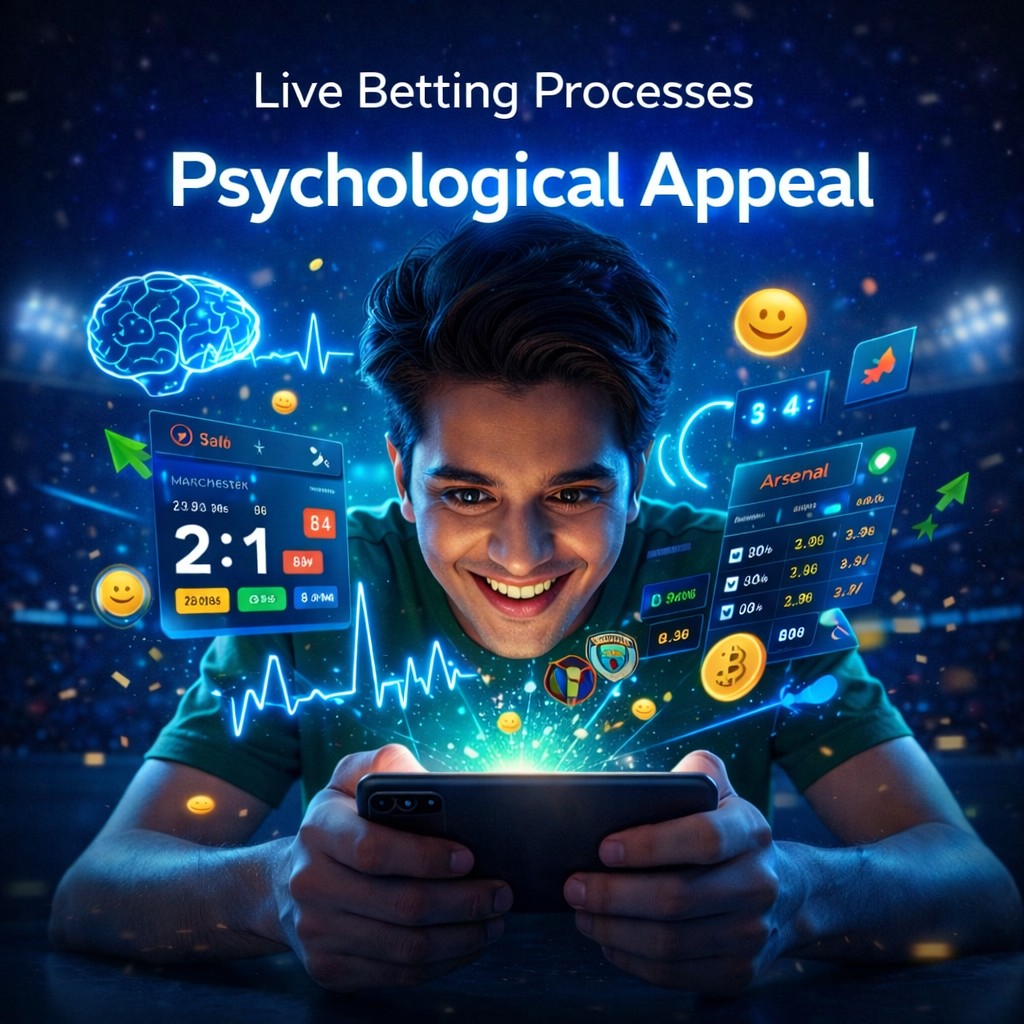
Prioritizing Your Emotional State
Emotional state is the most accurate barometer for evaluating the appropriateness of engaging in an activity. In clinical psychology, systematic Self-observation is considered a powerful tool. I propose structuring self-assessment into three phases: before, during, and after the activity. Before initiating usage, you should evaluate whether you are in a relaxed and rational state. If you log into the system feeling stressed from work duties, or wishing to use this activity to escape from sadness, that is an extremely high-risk starting point.
During usage, you must continuously monitor your own physiological and emotional signals. If you begin to perceive Irritation, muscle tension, an abnormally fast heartbeat, or feelings of anger towards outcomes that do not meet your expectations, these are warning signs that your emotional equilibrium is being lost. Furthermore, the desire to “win it back” (Chasing Losses) is the most dangerous cognitive trap. Upon concluding the session, you should examine your lingering feelings. If the activity ends with Guilt, anxiety, or a sense of emptiness, that is empirical evidence indicating that your pattern of engagement is deviating from mere entertainment and requires urgent reassessment.
When Taking a Break May Be Necessary
Recognizing your own saturation point and limits is a skill that requires honesty regarding your internal state. There are several indicators that serve as warning signals that it is time to cease the activity and create distance. The first is “Cognitive Fatigue,” which typically manifests through a loss of concentration, frequent decision-making errors, or the inability to accurately calculate basic probabilities as before. When the brain is fatigued, remaining in the system introduces significantly heightened risk.
The second indicator is the Loss of Time Track. If you find yourself in the system for several hours longer than intended without realizing it, it means this activity is entirely consuming your attention. The most critical signal indicating the need for an immediate break is the “attempt to recoup losses.” If you find yourself increasing your budget size or breaking your own self-imposed rules solely in the hope of recovering your capital, that behavior is driven by emotion, not logic. Clicking the logout button, stepping away from the screen, and switching to other physical activities are the most decisive and necessary measures to break this cycle of tension.
How to Understand Control Tools if Available

In modern digital platforms that prioritize user safety, technological architectures known as “Self-control Tools” are often integrated into the system. If the platform you use offers these functions, you should understand and apply them as assistants in maintaining discipline. These tools are not solely for individuals with problems, but are standard instruments for proactive risk management.
Commonly found tools may include “Deposit Limits,” where users can set a maximum ceiling on the budget allowed into the system per day, week, or month. Additionally, there might be “Time-outs” or Cooling-off Periods systems that block account access for a short duration, ranging from a few hours to several weeks, allowing the user time to regain composure. If a more drastic measure is required, there might be a “Self-exclusion” function, which completely suspends system access for a prolonged period. There may also be “Reality Checks” systems that periodically remind you how long you have been in the system. These tools function as pre-commitments you make with yourself while fully lucid, to prevent errors when overwhelmed by emotion.
When to Recognize the Need to Seek Help
No matter how good our defenses and tools are, the complexity of human psychology can lead to situations too challenging to manage independently. Recognizing that you need external help is not a symbol of weakness, but an expression of emotional maturity and the highest responsibility toward yourself and those around you.
If you find that your behavioral engagement in these activities begins to have concrete negative impacts—such as causing severe accumulated stress, creating conflict in relationships with family or friends, decreasing efficiency at work or studies, or generating unmanageable financial debt—that is the clearest breaking point. Furthermore, if you experience Obsessive Thoughts about this activity constantly, or attempt to hide this behavior from close ones, you should consider seeking help from a professional.
Currently, public health agencies, mental health counseling centers, and professional organizations specializing in addictive behaviors exist in almost every region. Consulting a psychologist or specialist will provide you with an objective perspective and a clearly structured recovery strategy. Seeking professional support is an exceptionally important step in reclaiming your life balance, helping you to move forward steadily with robust and complete mental well-being.